Run-flat versus conventional tyres
Run-flats promise a limp home without a spare. They also ride harder, cost more and leave you stranded in a different way. A clear-eyed comparison for Brisbane drivers.
4 March 2025 · Updated 16 April 2026 · 9 min read · Brisbane Tyres desk
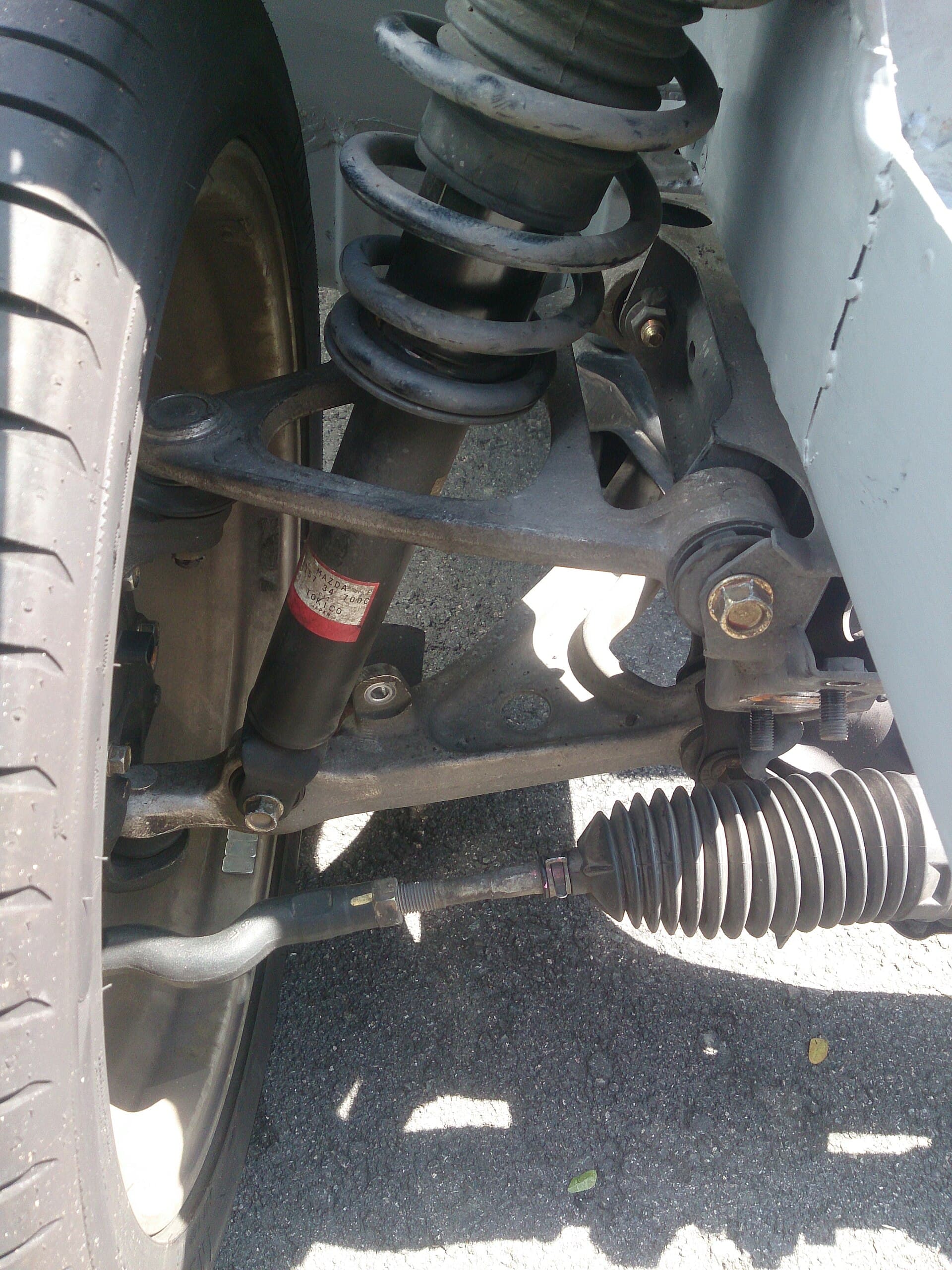
Photo: ProjectManhattan. Licensed CC BY-SA 3.0. Source and licence. See also the image credits page.

A run-flat tyre is a sidewall with an opinion. It is built to carry the car for a short, slow limp after the air has gone. That is a genuine gift on the Gateway at dusk when the shoulder is a paint line and a concrete wall. It is a less obvious gift in a suburban street in Kedron where you could have used a spare in ten minutes and gone home on a proper carcass.
European cars brought run-flats into Brisbane in a rush in the 2000s. Many of those cars still have no spare, just a foam kit that does not like a sidewall gash. The car tyres decision is then not “which brand”. It is “which philosophy”.
What the reinforced sidewall buys you
After a puncture, a run-flat is designed to go a limited distance at a limited speed — often around 80 kilometres at up to 80 km/h, depending on the maker. You get to a bay instead of sitting on a motorway phone. You also get a tyre that was stiffer when it still had air. That stiffness is the ride people complain about on Brisbane’s patched inner-city roads. It is also why some drivers think the car “feels cheap” after a previous owner swapped back to conventional rubber and suddenly discovered comfort.
Run-flats usually cost more. They are harder to repair, and many makers say do not repair them at all once they have been run flat. A puncture that would take a plug on a conventional tyre can be a replacement on a run-flat. Budget for that, or you will meet the philosophy on a Sunday when only one shop is open.
What you give away
Comfort. Noise, sometimes. A second-hand market that is thinner in odd BMW and Mini sizes. A fitter who has to keep more expensive stock. And a false sense of invincibility. A run-flat that has been driven for forty kilometres after the TPMS light with a ruined carcass is not a hero. It is a wheel waiting to crack.
If you swap a run-flat car onto conventional tyres, you must solve the spare problem. An inflator kit will not seal a torn sidewall. A space-saver, if the car can take one, needs its own pressure habit. You also need to know whether the stability program and speedometer were expecting the original overall diameter. A Brisbane fitter who has done this swap on your model is worth more than a national chain script.
Queensland-specific annoyances
Heat. A run-flat already runs a stiffer, warmer sidewall. Summer pressures need the same morning check as any other tyre — more so, because a slow leak on a run-flat can be a long, expensive cook if you miss the light. Heatwave pressures apply.
Potholes. A stiff sidewall transmits the hit. You may save the tyre and bend the rim. You may do both. After a wet week on Queensland roads, walk around the car.
A practical way to choose
Keep run-flats if the car has no spare, you do motorway kilometres, and you will replace a damaged run-flat instead of bargaining with a plug. Switch to conventional if you can carry a spare, you hate the ride, and you accept that a puncture is now your problem on the shoulder.
There is no moral victory either way. There is a bill, a ride, and a plan for the Tuesday night the tyre gives up. Write the plan down before you need it. That is all this technology was ever for.
A longer look at the same job
The short version of Run-flat versus conventional tyres is the part you will remember in a fitting bay. The longer version is how that advice survives a Brisbane year: heat in January, a storm in February, a pothole week in March, a highway run at Easter, and a fitter who is busy on a Friday. This desk exists so the longer version still has somewhere to live.
Start with the car you have, not the car in the brochure. Read the door placard. Photograph both sidewalls. Write the pressures down. If you tow, if you run a roof box, if the car is a hybrid with a heavy nose, say those things out loud before anyone quotes a special. A special that ignores load is not a special. It is leftover stock.
How this sits with the rest of the archive
Nothing on Brisbane Tyres is meant to be a lone pamphlet. The car tyres hub still opens the same door the 2007 site opened. Motorcycle tyres still warn you to match front and rear. Tyre suppliers still tell you to test knowledge. Cheap tyres still tell you not to panic-pay, and not to confuse a bargain with a carcass. Care and safety is the weekly habit. Queensland roads is the climate. History is why the brands on a quote have grandparents.
If you are reading this article because a quote confused you, take questions to ask before you buy and how to compare tyre quotes into the bay. If you are reading it because a tyre already failed, take punctures and when to replace. If you are reading it because the sky has gone black, take wet-weather and aquaplaning.
Local details that do not fit a national brochure
Coarse chip-seal on suburban arterials roars a pattern that was quiet on a European press loop. Concrete on the Gateway drones a budget block. Painted crossings after a first rain are ice. A west-facing brick wall in Woolloongabba is an oven. A flooded dip on a hinterland road is not a place to test remaining groove. These are not colourful asides. They are the test conditions.
A fitter who has only worked in a climate-controlled warehouse will still mount a tyre correctly. A fitter who has seen a January week in this city will also ask about the spare, the alignment and the storm. Prefer the second person. Pay them.
What we will not tell you
We will not crown a single “best tyre in Brisbane”. We will not pretend a house brand is secretly a flagship. We will not tell you to ignore the placard because a forum likes a plus-size look. We will not tell you a string plug is a career. We will not tell you a ten-year-old tyre is fine because it has tread. Those sentences sell well. They fail on the road.
We will tell you to measure, to write dates down, to buy the load index you need, and to replace a wet-season tyre before the legal minimum makes the decision. That is a dull kind of editorial courage. It is also the only kind that belongs on a site that started as information on all the different tyres in the market.
A closing habit
Once a month, on a morning the car has sat, check pressures, look at inner shoulders, look for nails, look at the week code if you still do not know it. Once a season, before the first proper storm, measure tread. Once a year, get an alignment printout if the car has hit anything it felt. Those three loops will save more money than a coupon.
If something on this page is wrong for your vehicle, write to the contact desk and name the article. We correct dates and we correct advice. The old site was chatty. We kept the chat and added the duty of care.
A worked example from a ordinary Saturday
Imagine a 2016 medium SUV in Coopers Plains, door placard 225/65R17 102H, two school seats, a dog, a weekend bag. The fronts are feathered inside. The rears have 4 millimetres. A chain has a $99 special in 225/65R17 98H. A local independent has a mid-range 102H for $40 more a corner and will align the car the same morning. The cheap special is not cheaper. It is a lower load index on a car that already lives full, and it will inherit a bent alignment. The independent is the grown-up quote.
Now change one fact: the car is a third car that does 2,000 kilometres a year to a boat ramp in the dry. The cheap special, if the date is fresh and the fitter will still write an invoice, can be the right rung. The article you are reading is how to tell those two Saturdays apart. The facts change. The method does not.
If you want a second human to look at a quote, that is what the write for us and contact pages are for — not to sell you a tyre, to tell you whether the sentence on the invoice is complete. Completeness is the product this publication actually sells.
Frequently asked
- Can I replace run-flats with ordinary tyres?
- Sometimes, if the car has a spare or an inflator kit and the maker allows it. You lose the limp-home design the car was sold with. Get that in writing from a fitter who will stand behind the speedo and TPMS.
- Do run-flats need special rims?
- They are happier on rims designed for them. A cheap swap onto ordinary rims is how beads unseat.
- Are they safer?
- They are safer in the specific case of a puncture at speed on a motorway with no shoulder. They are not safer if you ignore pressure because 'it can run flat'.
More from Car Tyres
Quiet touring tyres for Brisbane commutes
The Gateway and the ICB will tell you if you bought a cheap, noisy carcass. How to shop for touring rubber that stays civil after 6am and still works in the wet.
8 April 2025
Load index and speed ratings explained
91V is not a trim level. It is the carrying capacity and the speed the carcass was built for. How to read those two characters before a special makes them disappear.
21 March 2025
When to replace passenger car tyres
Tread bars, cracks, age stamps and a wet-season scare are different clocks. How Brisbane drivers should decide a tyre is finished before the legal minimum makes the decision for them.
18 February 2025